What soiling costs you.
Soiling is the industry term for anything on the panel that stops light reaching the cell — dust, pollen, lichen, bird mess, and the fine grit the nor'wester carries off the paddocks.
In a wet climate with regular rain, losses tend to sit low. In dry, dusty regions with long gaps between rainfall, published research consistently puts them far higher, and the losses keep climbing across a dry spell rather than levelling off. Central Otago sits firmly in the second group, not the first.
I am not going to quote you a percentage for your specific roof, because it depends on your tilt, your aspect and how long since it last rained properly. What I can say is that the flatter the panel and the longer the dry stretch, the worse it gets.
Why rain does not do the job.
The common assumption is that rain washes panels clean. It does not, for two reasons.
First, light rain wets the dust and then dries, leaving a bonded layer that is worse than the loose dust was. You need genuinely heavy rain to shift anything.
Second, rain runs down the panel and stops at the bottom edge, where the aluminium frame sits slightly proud of the glass. Grit collects along that lip and stays permanently damp — which is exactly where lichen and moss take hold. That bottom-edge band is the part rain will never clean, and it is shading the row of cells that matters most.
The bit most people miss about shading.
Panels in a string do not fail gracefully. Because of how the cells are wired, heavy shading on one part of a panel can drag down the output of the whole string, not just the shaded portion.
That is why a dirty strip along the bottom edge, or one splat of bird mess, costs more output than its size suggests. It is also why cleaning the whole array properly matters more than getting most of it mostly clean.
How they should be cleaned.
Panels are more delicate than they look, and the surface is an anti-reflective coating rather than plain glass.
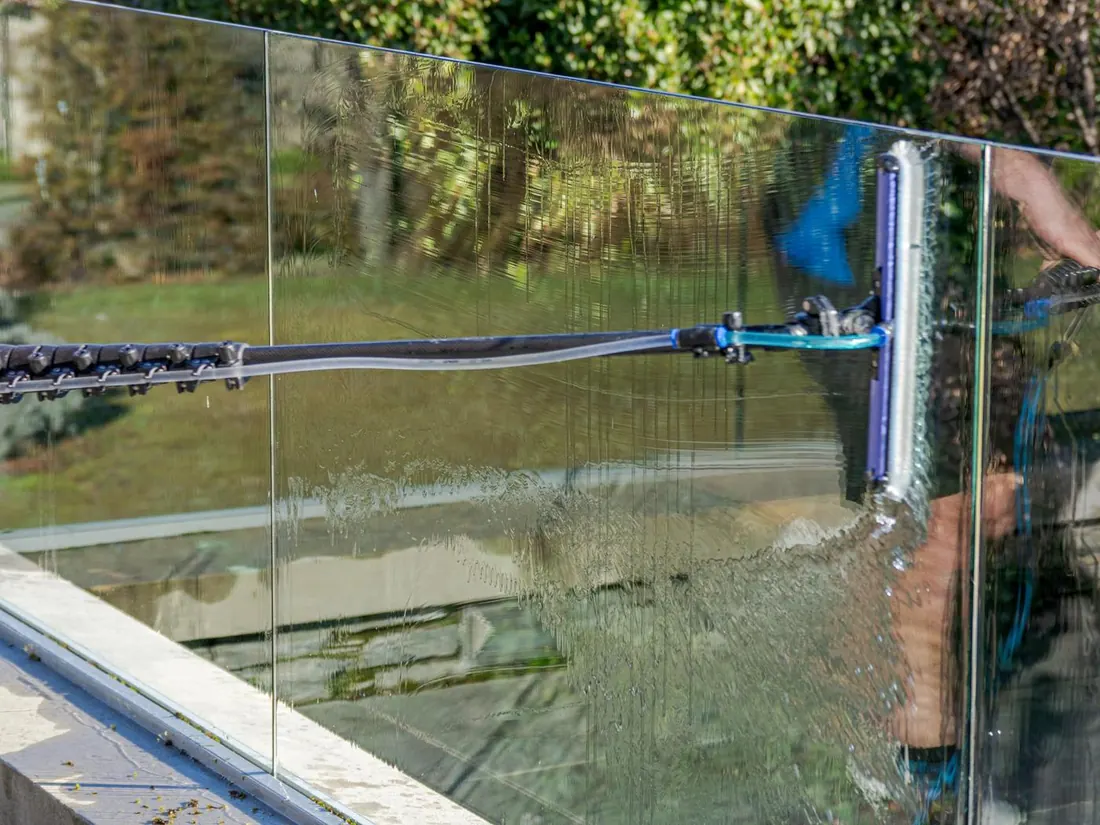
- Pure water, no detergent. Soap leaves a film that dust then bonds to, so a detergent clean soils faster than no clean at all. Filtered water dries off leaving nothing.
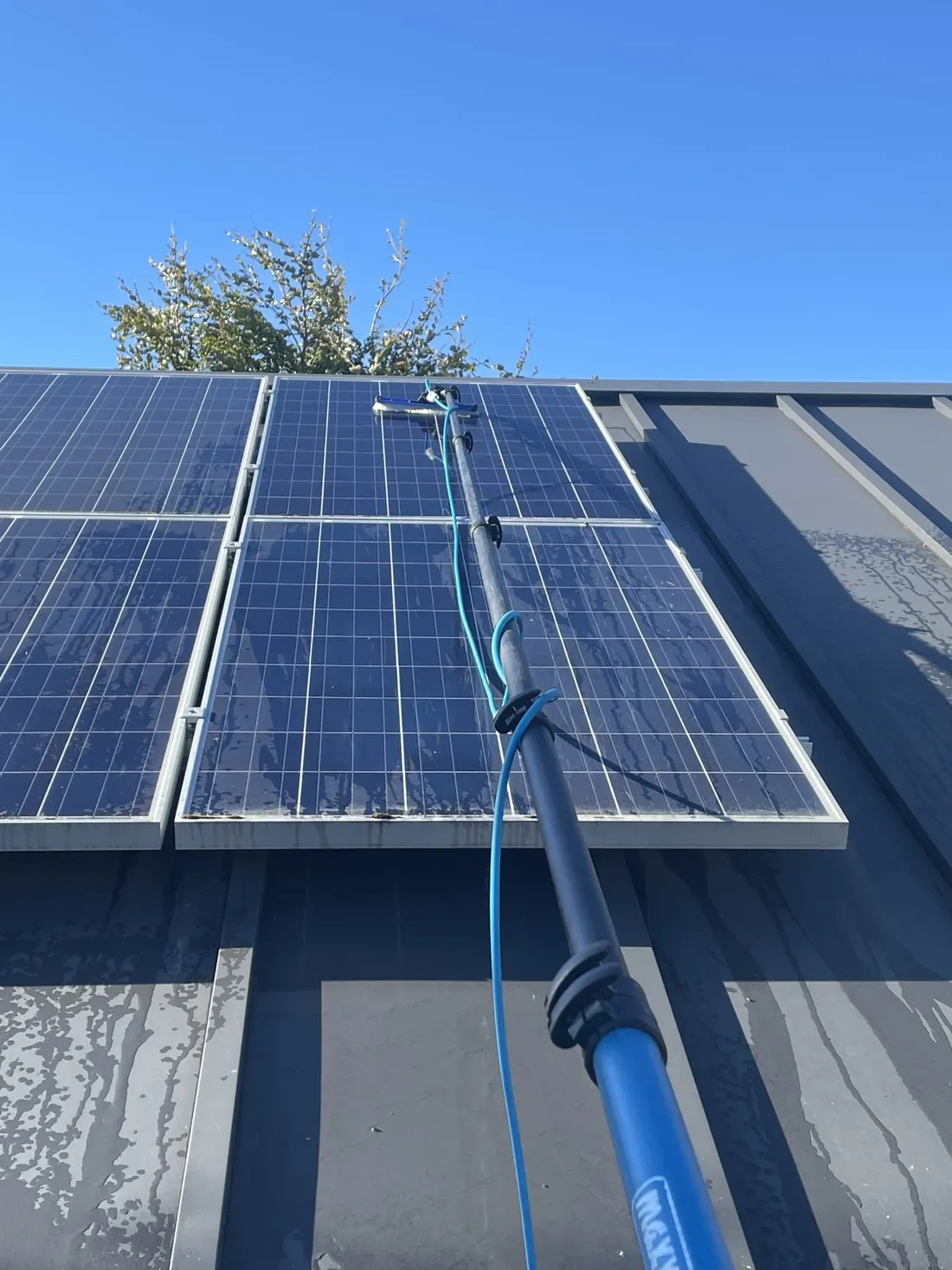
- Soft brush on a water-fed pole. Nothing abrasive — scratching the anti-reflective coating permanently reduces output.
- From the ground where possible. Walking on an array cracks cells invisibly. Microcracks do not show and do not announce themselves; the output just quietly drops.
- Early morning or overcast. Cold water on hot glass risks thermal shock, and it evaporates before you have rinsed properly.
- The frame edges as well as the face. That is where the lichen is.
How often.
Once a year suits most Wānaka and Upper Clutha installs. Twice if you are on a gravel road, near stock or cropping, under trees that drop, or somewhere birds sit.
The honest test is to look at your generation figures across a long dry spell. If output is drifting down while the weather stays clear, that is soiling, not the panels ageing.
Worth knowing before you book anyone.
Search "solar panel cleaning" around here and the top result is often a Dunedin company. There is nothing wrong with them, but they are three hours away, and this is a job where the person doing it should be able to come back if a panel needs a second look.
I am in Wānaka, I use the same pure water system I use on glass, and I work off a pole rather than climbing on the array.
Common questions